
Qdoba burritos are hard to size up by eye. Two can look identical, and one comes in around 700 calories while the other tops 1,000. Protein isn’t usually the reason. The tortilla, rice, cheese, and creamy toppings are. Below, the calories by ingredient, with the biggest swings first.
What goes into a Qdoba burrito and why the calories add up fast
There isn’t one calorie number that fits every Qdoba burrito. A basic burrito with tortilla, rice, and beans starts around the low 600s, while a more loaded order can land around 720 to 1,200 calories, with some builds going higher. Qdoba’s nutrition and allergen page makes that mix-and-match reality easy to see.
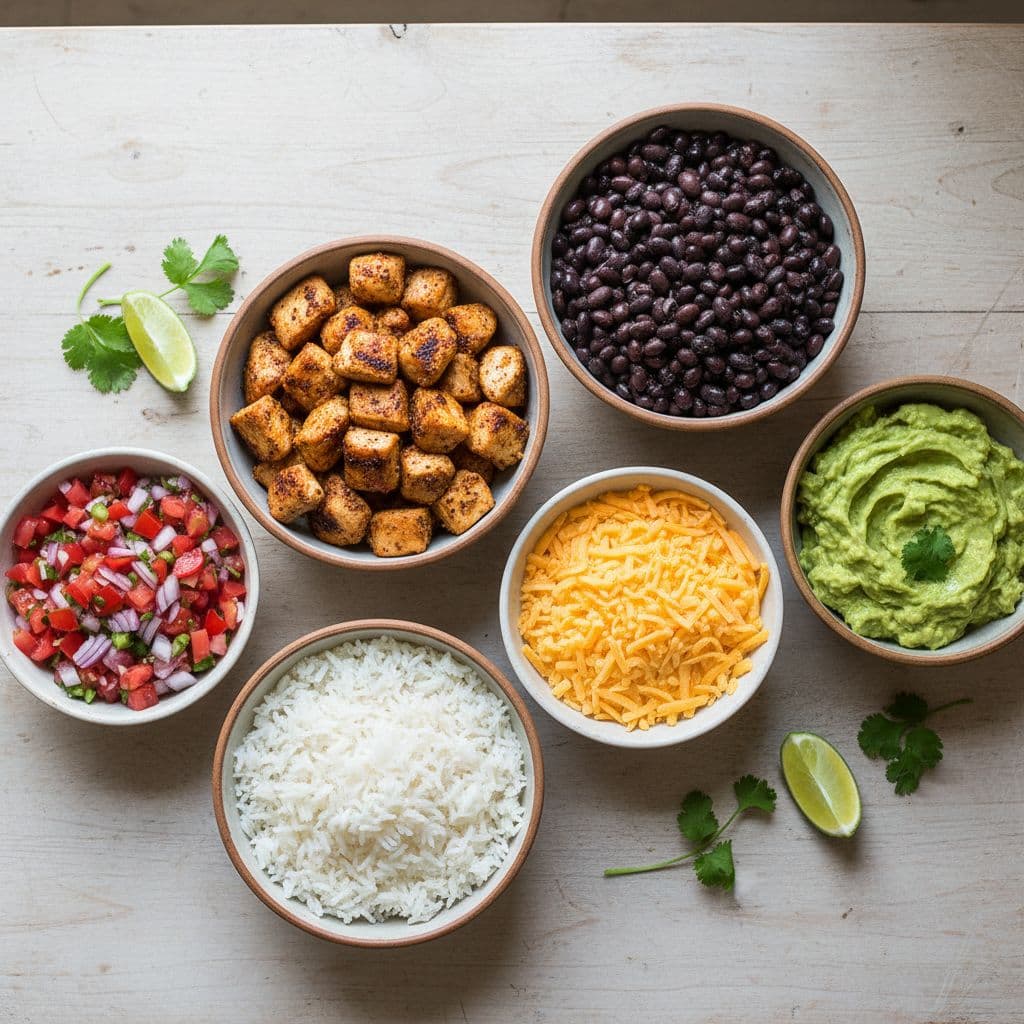
Most burritos start with a large flour tortilla, then rice, beans, and a protein like chicken or steak. After that, toppings can pile on quickly, cheese, sour cream, guacamole, queso, salsa, lettuce, and fajita veggies. Some of those add only a little. Others change the total in a hurry.
The tortilla alone can change the calorie count a lot
The tortilla is often the first big calorie hit. A standard flour tortilla adds roughly 300 calories before the fillings even start. That is why a burrito and a bowl can feel similar in size but land far apart in calories.
A smaller tortilla would lower the total, if that format is available, but Qdoba’s standard large tortilla is the one that matters most for most orders. If you want the biggest drop, skip the wrap and order a bowl.
Protein, rice, and beans are the biggest building blocks
Protein, rice, and beans do most of the heavy lifting. Chicken and steak usually add solid protein without being the highest-calorie part of the meal. Rice often adds as many calories as the meat, or more, because the portion is larger.
Beans sit in the middle. They add calories, but they also bring fiber and some protein, so they tend to make a burrito more filling. That matters because a satisfying burrito can stop you from chasing extra sides later.
Calories for every common burrito item at Qdoba
The numbers below are approximate and can vary by portion, recipe changes, and location. They line up with current menu documents and nutrition tools available in 2026. The 2025 nutrition brochure lists a basic burrito with tortilla, rice, and beans at about 610 to 640 calories, which shows how fast extras can raise the total.
Here is the quick-reference view.
| Item | Approx. calories | Why it matters |
|---|---|---|
| Flour tortilla | 300 | Biggest single base item |
| Cilantro-lime rice | 150-210 | Adds bulk fast |
| Grilled chicken | 150-180 | Good protein for the calories |
| Steak | 150-170 | Similar range to chicken |
| Black or pinto beans | 120-140 | Moderate, filling add-on |
| Shredded cheese | 100-130 | Small scoop, quick jump |
| Sour cream | 90-120 | Easy to stack with cheese |
| Guacamole | 120-180 | Calorie-dense, even in a modest scoop |
| Queso | 120-170 | Rich topping that adds up fast |
| Fajita veggies | 20-40 | Low-calorie volume |
| Lettuce, pico, salsa | 5-40 | Flavor with a light calorie hit |
The fastest calorie jump usually comes from the tortilla plus one or two creamy toppings.
For a deep dive into the full Qdoba menu items’ nutrition facts, check out our nutrition facts table and nutrition calculator.
Tortillas, proteins, and rice
Start with the tortilla and rice, because they often drive the total more than people expect. Salsa and lettuce barely move the number, but a full tortilla plus rice can add 450 calories or more before beans, protein, or toppings.
Chicken and steak are still meaningful, yet they tend to be more efficient than the carb-heavy base. If you’re trying to trim calories fast, cutting some rice usually does more than swapping one lean protein for another.
Beans, cheese, sauces, and creamy toppings
Beans are a moderate add-on, and they help with fullness. Cheese, sour cream, guacamole, and queso are different. They are tasty, but they can push a burrito from reasonable to heavy in a few scoops.
Add cheese, sour cream, and guacamole to a full burrito, and you may tack on 300 calories or more. Queso can do the same kind of damage, especially if you keep the tortilla and a full rice portion.
Veggies, salsa, and lighter add-ons
This is the easy win. Fajita veggies, lettuce, pico de gallo, and many salsas add flavor, moisture, and bite without a major calorie jump.
If you want a burrito that still feels full in your hands, these toppings help. They increase volume, which makes lighter builds feel less skimpy.
How to build a lower calorie Qdoba burrito without losing flavor
A lighter burrito doesn’t have to feel stripped down. The best approach is to keep the parts that make it filling, then trim the parts that pack calories without much staying power. If you like to compare custom builds before ordering, a burrito nutrition calculator can help you test combinations first.
Smart swaps that save the most calories
The biggest move is skipping the tortilla. That one change can save roughly 300 calories at once. The 2024 nutrition brochure shows a similar gap, with bowls starting hundreds of calories lower than burritos.
Next, cut back on rice. A half portion can save around 75 to 100 calories without changing the meal too much. After that, go lighter on sour cream, queso, and cheese. Those toppings are easy to miss in the moment, but they can raise the total fast.
Keep the protein, beans, salsa, and veggies. That mix usually gives you the best balance of fullness and flavor.
When a higher calorie burrito can still make sense
A bigger burrito isn’t automatically a bad choice. If you need a more filling lunch, more energy for a long day, or a post-workout meal, extra rice, beans, and protein can work well.
The key is knowing where the calories are coming from. A protein-heavy burrito and a sauce-heavy burrito can end up near the same total, but they won’t satisfy you in the same way.
Conclusion
The meat is only part of a Qdoba burrito’s calories. The tortilla, rice, cheese, and creamy toppings usually add more. Check those first, then put whatever’s left of your budget toward protein and extras.