
Qdoba’s published nutrition information includes chicken, steak, and a Plant-Based Impossible option. You may see other proteins on third-party menu sites, but those aren’t always at every location, and their numbers are less reliable. Serving size changes the figures either way, so stick to the official ones when you can.
Key Takeaways
- QDOBA’s official dietary page names two chicken options and Grilled Adobo Steak.
- Plant-Based Impossible appears in published nutrition information, but that doesn’t establish availability at every restaurant.
- The official nutrition PDF dated November 3, 2025, isn’t verified October 2026 data.
- Compare equal portions, account for toppings, and treat extra protein as a customization with potentially different pricing.
QDOBA protein options include meat and plant-based choices
Availability varies by location and over time. QDOBA’s official materials and independent menu databases also describe different sets of choices.
Chicken, steak, and featured meat choices
QDOBA’s official dietary page names Flame-Grilled Adobo Chicken, Grilled Adobo Steak, and Cholula Hot & Sweet Chicken. These are the clearest officially documented meat choices in the available information.
Outside menu sources also list pork carnitas, brisket birria, ground beef, chorizo, and shrimp. However, those listings don’t establish nationwide availability. Some sources even use different names, such as “Smoked Brisket” instead of “Brisket Birria,” so those entries shouldn’t automatically be treated as interchangeable.
Plant-Based Impossible offers a meat-free option
QDOBA’s published nutrition information identifies Plant-Based Impossible Protein as a plant-based choice. It gives diners another protein category beyond chicken and steak.
However, its presence in a nutrition document doesn’t establish current availability everywhere. The plant-based label also doesn’t establish that a finished entrée meets vegan requirements or a particular food allergy restriction. Other ingredients and preparation practices matter.
Compare QDOBA protein nutrition without guessing
Among QDOBA protein options, a useful nutrition comparison starts with the portion. Numbers from different years or serving sizes can create misleading rankings.
Why calories and protein numbers can differ
QDOBA’s official nutrition PDF dated November 3, 2025, lists grilled adobo chicken at 150 calories and 16 grams of protein per 3.5-ounce serving. It lists Plant-Based Impossible at 180 calories and 13 grams of protein per 3.1-ounce serving.
Those are dated figures, not verified October 2026 values. Third-party databases published or updated in 2026 report different numbers and sometimes different portions. A newer database entry doesn’t automatically replace an official nutrition panel, especially when the serving descriptions don’t match.
Look at the whole meal, not just the protein
Rice, beans, cheese, queso, sauces, and other toppings all affect an entrée’s total nutrition. Beans can contribute protein, while other additions change calories and nutrients in their own ways.
A chicken bowl with several toppings won’t have the same totals as chicken alone. Likewise, choosing Plant-Based Impossible doesn’t automatically make the finished meal lower in calories. Compare complete builds when deciding which meal fits your preferences.
Build a QDOBA meal around your protein goals
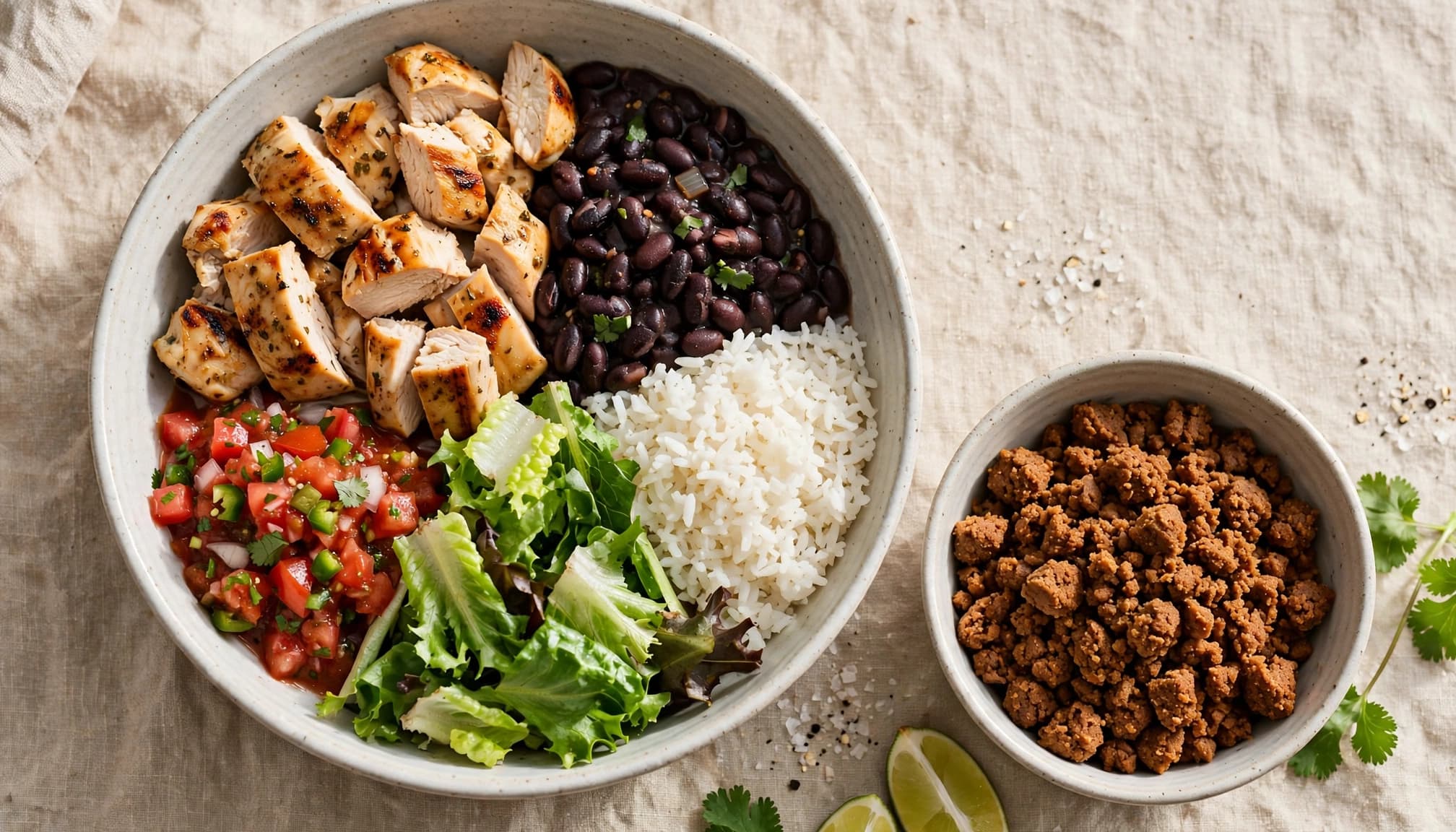
Your protein choice is one part of a customized entrée. The format and additional ingredients determine how the meal comes together.
Choose a bowl, burrito, or salad that suits your appetite
Bowls, burritos, and salads offer different ways to organize a meal, where those formats are available. A bowl keeps ingredients easy to combine, while a burrito adds a tortilla to the build.
QDOBA promotes adding extra protein to an entrée. Its dietary page also describes a Chicken Protein Bowl with extra chicken and extra beans. Double-protein selections and added charges can vary, so extra protein shouldn’t be assumed to be included in the base price.
Match the protein to your preferences
Chicken or steak provides a meat-based starting point. Plant-Based Impossible provides a plant-based choice where offered, and beans can add protein alongside either selection.
For a filling entrée, consider the full combination rather than ordering extra meat automatically. With dietary restrictions, ingredient details and cross-contact practices matter too; a protein’s name alone doesn’t establish whether the finished meal is suitable.
Frequently Asked Questions
Does every QDOBA location offer the same proteins?
No. Choices can differ by restaurant, market, ordering channel, and limited-time promotion. A national nutrition listing or third-party menu doesn’t guarantee that an item appears on your selected restaurant’s menu.
Which QDOBA protein has the most protein per serving?
The available figures don’t support a definitive current winner because sources disagree on nutrition values and portion sizes. A fair comparison uses the same serving basis and nutrition information from the same period. Comparing a larger portion against a smaller one can distort the result.
Is Plant-Based Impossible available at QDOBA?
It appears in QDOBA’s published nutrition information, but that listing doesn’t establish current local availability. It also doesn’t establish suitability for every vegan diet or allergy requirement, particularly once other ingredients and preparation enter the picture.
Can I add extra protein to my QDOBA entrée?
QDOBA describes extra protein as an entrée customization. However, the available protein selections and added cost can vary. A double-protein build also needs its own nutrition calculation rather than the figures for a standard portion.
Choose Your Protein With the Whole Meal in Mind
Qdoba has meat and plant-based proteins, but the menu and the nutrition numbers can vary by location. A protein’s numbers only tell you so much, since rice, toppings, and portion size shape the total. Pick one that’s on your local menu, then add up the whole order using the current nutrition information.