

Copycat Qdoba cilantro lime rice brings bright citrus, fresh herbs, and fluffy grains to your own kitchen. This approachable version starts with long-grain white rice and gets its fresh flavor after cooking.
It’s a Qdoba-inspired copycat, not the restaurant’s confirmed recipe. Qdoba’s nutrition information lists cilantro lime rice, but doesn’t include its ingredients or cooking method. For a satisfying homemade version, start with measured rice and water, then finish with cilantro and lime.
Copycat Qdoba cilantro lime rice you can make at home
Expect tender rice with separate grains, plenty of chopped cilantro, and enough lime to brighten each bite. The finished dish should taste lightly seasoned, so it works alongside salsa, beans, or grilled food without overpowering them.
This recipe uses measured proportions found in published cilantro-lime rice recipes as a practical home starting point. Those proportions aren’t Qdoba’s official formula.
The main version uses 1 cup long-grain white rice and 1¾ cups water. Fresh cilantro and lime juice go in after cooking, which keeps their flavor lively. The batch makes roughly 3 cups cooked rice, enough for about four side servings.
Gather the rice, lime, and herbs for a bright, fluffy side
Core ingredients for the main recipe
Gather these ingredients before turning on the stove:
- 1 cup regular long-grain white rice, not instant rice.
- 1¾ cups water for cooking.
- 1 to 2 tablespoons neutral oil, such as canola or vegetable oil.
- ½ teaspoon fine salt to start, plus more to taste.
- About ½ cup chopped fresh cilantro.
- 1 to 2 tablespoons fresh lime juice, adjusted to taste.
The rice provides the fluffy base, while oil lightly coats the grains. Start with 1 tablespoon oil for a lighter finish; use 2 tablespoons for a richer result.
Cilantro supplies the herbal flavor. Tender stems are fine to include, but remove thick, tough stems. Because limes vary in size and tartness, measure the juice rather than assuming every lime gives the same result.
Optional additions and substitutions
For more lime aroma, add ½ teaspoon finely grated lime zest to the cooking water. Grate only the green outer peel because the white pith tastes bitter.
Vegetable or chicken stock can replace the water. However, stock changes the flavor and may add substantial salt. With salted stock, reduce or omit the initial salt, then season the finished rice.
Keep these choices separate from the main recipe. Neither stock nor lime zest is necessary for a bright, well-seasoned batch.
Cook the rice first, then add cilantro and lime
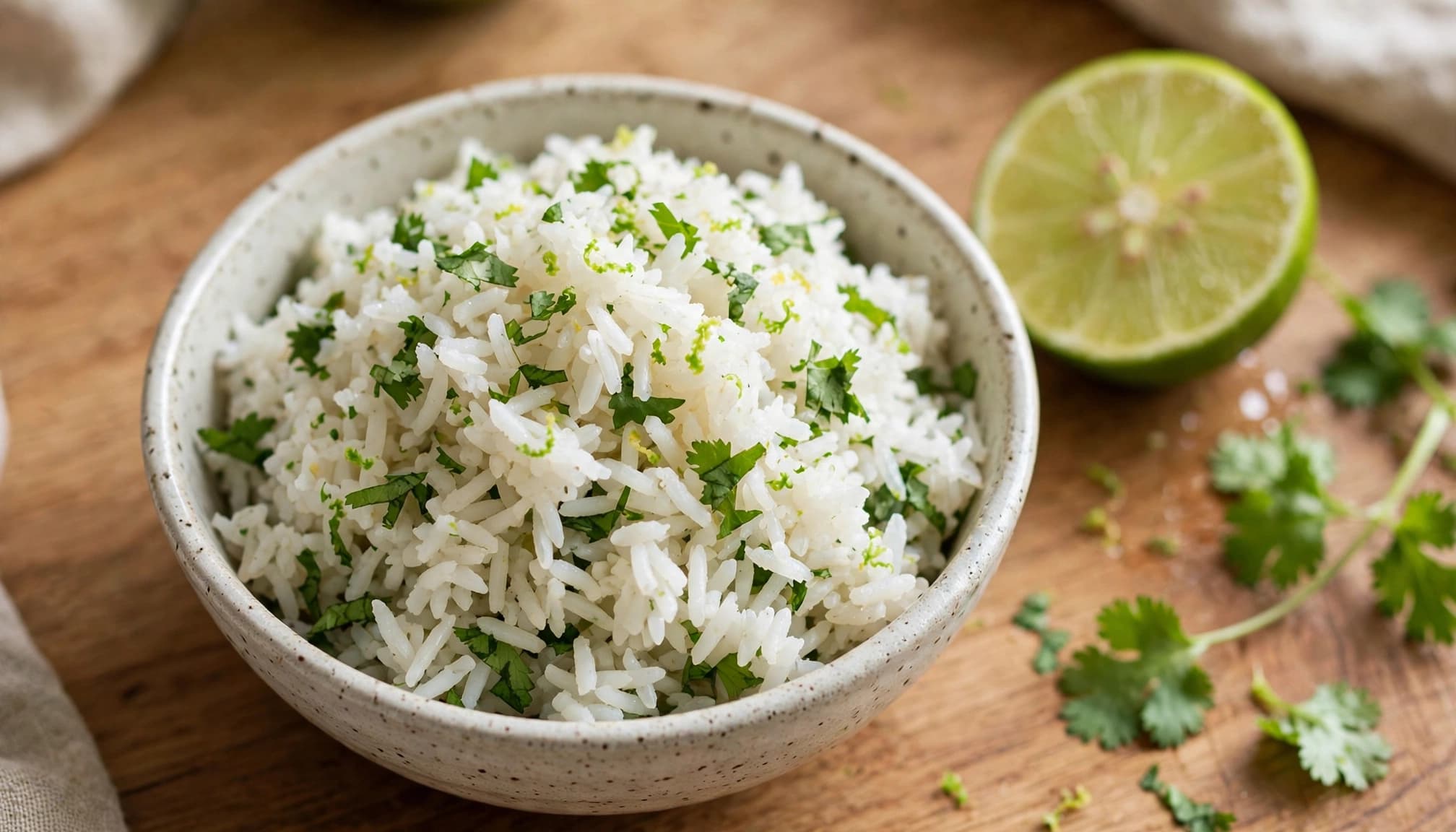
Stovetop method for long-grain white rice
Use a saucepan with a tight-fitting lid so steam stays inside while the rice cooks.
- Rinse the rice if desired. Place it in a fine-mesh strainer, rinse under cool water, and drain thoroughly.
- Combine the rice, 1¾ cups water, oil, and salt in the saucepan. Add optional lime zest now.
- Bring to a boil over medium-high heat. Cover, reduce the heat to low, and simmer gently for about 18 minutes. Use your rice package’s timing if it differs.
- When the liquid has absorbed and the rice is tender, remove the pan from the heat. Rest, covered, for 10 minutes.
- Fluff gently with a fork. Fold in the cilantro and 1 tablespoon lime juice, then taste. Add more lime juice and salt gradually.
Avoid stirring during cooking, which can break grains and make the rice sticky. Also, keep the lid closed during the resting period so the remaining steam can finish the texture.
Add lime gradually after cooking. You can increase the acidity easily, but you can’t remove excess juice.
Use a separate liquid ratio for basmati rice
Basmati is a useful alternative, but don’t automatically carry over the main recipe’s water measurement. One published cilantro-lime basmati recipe uses 2 cups water per cup of rice, rather than the 1¾ cups used here.
Use a measured recipe designed for your basmati and follow its package timing. After cooking and resting, fold in the cilantro and lime juice as usual. Keep each rice variety paired with its appropriate liquid ratio.
Serve it fresh and save leftovers safely
Serve the rice warm in burrito bowls with beans, salsa, and your preferred protein. It also works beside tacos or grilled vegetables. Add wetter toppings at the table so the rice doesn’t become soggy while it waits.
For meal prep, store the rice separately from cold toppings. That lets you reheat the grains without warming lettuce, sour cream, or avocado.
Refrigerate leftovers within 2 hours, following USDA leftover food safety guidance. Divide the rice into shallow, airtight containers rather than leaving a deep pot on the counter. Keep refrigerated rice for 3 to 4 days.
Reheat only the portion you’ll eat, and reheat it only once. For the microwave, add a splash of water, cover loosely, and stir partway through heating. In a skillet, add a little water and warm gently, stirring occasionally.
Heat until steaming hot throughout. If you have a food thermometer, leftovers should reach 165°F. A little fresh cilantro or lime juice can refresh the flavor afterward.
Make the final seasoning your own
A flavorful copycat Qdoba cilantro lime rice starts with well-cooked grains and finishes with fresh herbs and citrus. Keep the lid closed while cooking, allow the rice to rest, and season afterward.
Adjust lime, cilantro, and salt to suit your plate. You’ll have a flexible homemade side while keeping the distinction clear: this is a Qdoba-inspired copycat, not an official restaurant formula.