
Is Qdoba or Chipotle better for nutrition? Neither wins by default. What you put in the bowl matters more than the name on the door. Rice, cheese, queso, guacamole, and chips can push either order past 1,000 calories, while a bowl built on protein, beans, and salsa stays well under that. Compare the specific items you’d actually order, side by side, and check the allergen details while you’re at it.
Key Takeaways
- Neither chain is always the healthier choice.
- Bowls skip the tortilla, but toppings can still add many calories.
- Beans, vegetables, and salsa can add fiber and volume.
- Chips, creamy toppings, and drinks often change the meal total most.
- Check current nutrition and allergen details before ordering.
Qdoba vs Chipotle Nutrition: How Basic Meals Compare
Similar meals can look almost identical at the counter but differ after toppings. A chicken bowl at Qdoba can offer a solid protein base, while a steak, veggie, or plant-based order changes the fat and calorie mix.
Restaurant portions also vary. Recipes, limited-time items, and local menus can change. Qdoba posts its current nutrition and allergen information, while Chipotle lets you build a meal in its official nutrition calculator.
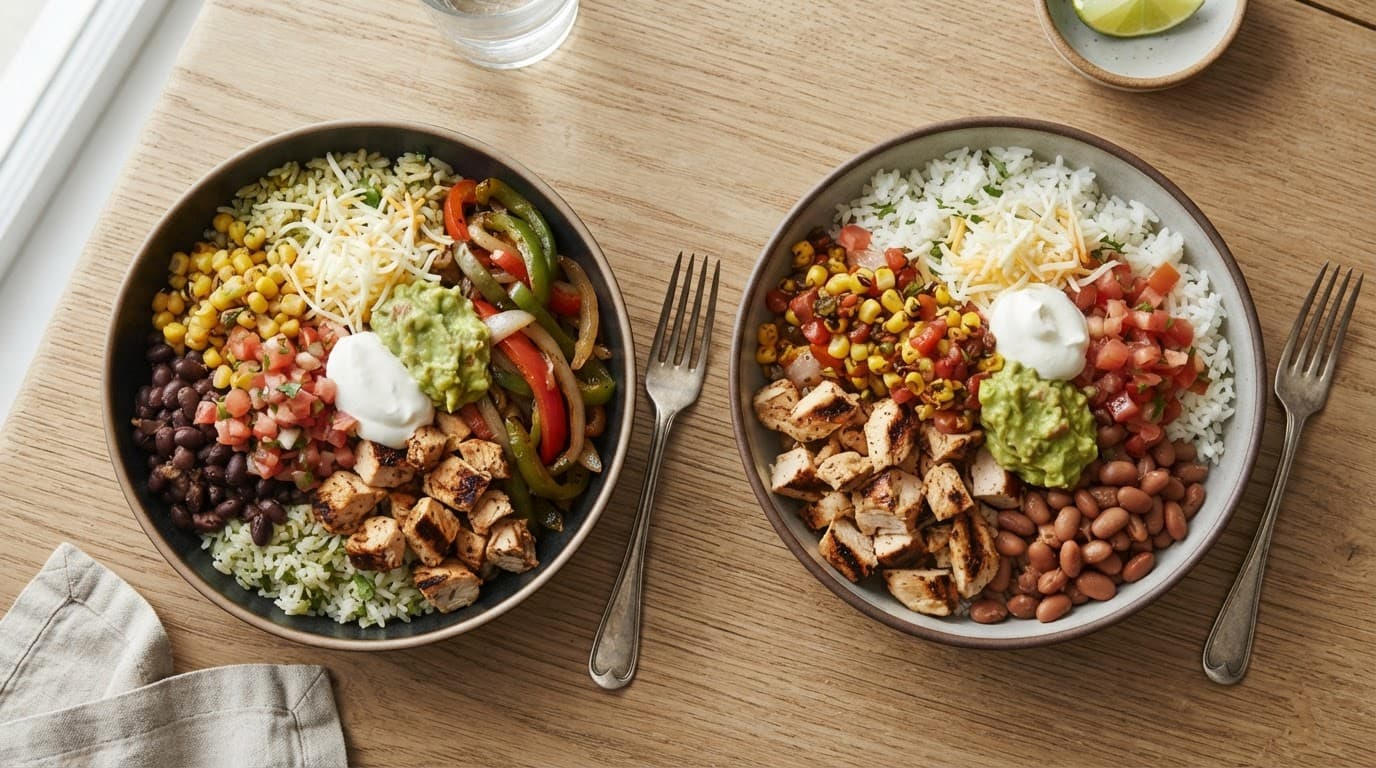
Calories, protein, and fat depend on the ingredients
A bowl isn’t always lighter than a burrito. Rice, beans, chicken, cheese, queso, sour cream, and guacamole can quickly create a large meal.
Chicken and steak can both add meaningful protein. However, cheese, queso, and sour cream add fat and calories at the same time. Guacamole adds mostly unsaturated fat, but its calories still count toward the whole meal.
Protein needs differ by age, body size, activity, and health goals. Compare protein with the meal’s total calories and portion size instead of judging one ingredient alone.
Sodium, fiber, and carbohydrates deserve equal attention
Calories tell only part of the story. Rice, tortillas, cheese, sauces, and salty salsas can raise carbohydrates or sodium.
Beans, fajita vegetables, lettuce, and fresh salsa can make a meal more filling while adding fiber. A large flour tortilla adds a sizable amount of carbohydrates before any filling goes inside it. For a fair Qdoba vs Chipotle nutrition check, compare the complete order.
The Biggest Nutrition Differences Come From Your Order Build
Small choices can move your meal in either direction. Start with a bowl if you want to skip the tortilla. Then choose protein, beans, vegetables, and salsa before adding richer extras.
A practical build often includes:
- Choose one rice portion, or skip rice if carbohydrates are your main concern.
- Add beans and vegetables for fiber and fullness.
- Pick one creamy topping instead of stacking cheese, queso, sour cream, and guacamole.
- Ask for sauces on the side when sodium or calories matter.
- Skip chips when your entree is already large.
Chips can turn a filling entree into a second meal, especially when paired with queso or guacamole.
Tortillas, bowls, tacos, and chips can change the total fast
A burrito’s tortilla adds calories and carbohydrates that a bowl avoids. Still, a bowl with double rice, cheese, queso, guacamole, and chips can exceed a burrito’s total.
Tacos can help with portion control when you order fewer fillings. Chips deserve the same attention as the entree because they are easy to share, snack on, and underestimate. Build the main meal first, then decide if a side still fits your goal.
Queso and guacamole are not automatic winners
Guacamole has fats from avocado. Queso has dairy-based fat and sodium. Neither choice is “bad,” but both need a reasonable portion.
Qdoba includes guacamole and queso with many entrees, which can make it tempting to add both. Its official nutrition materials list a 4-ounce 3-cheese queso serving at 190 calories. Use one richer topping when you want more room for rice, beans, or chips.
Which Restaurant Is Better for Your Nutrition Goal?
Both chains can fit a balanced eating plan. Your best order depends on what you want from the meal.
Best choices for a lower-calorie or higher-protein meal
For lower calories, order a bowl with grilled chicken or another lean protein, beans, vegetables, and salsa. Choose a smaller amount of cheese, queso, or guacamole.
For higher protein, start with the restaurant’s calculator instead of assuming steak always wins. Beans add some protein, too. Also, a sugary drink and chips may add more calories than you expect.
Vegetarian, vegan, gluten-free, and allergy concerns
Vegetarian meals can include beans, vegetables, salsa, and cheese. Chipotle identifies Sofritas as vegan and vegetarian approved in its dietary materials.
Flour tortillas contain wheat. Qdoba also warns that food may come into contact with milk, egg, soy, wheat, peanuts, tree nuts, fish, and shellfish. People with severe allergies should review current guidance and speak with staff about shared prep areas.
Frequently Asked Questions
Is Qdoba healthier than Chipotle?
Neither restaurant is always healthier. Ingredients, portions, sides, toppings, and drinks decide the nutrition of your meal.
Is a Qdoba or Chipotle bowl healthier than a burrito?
A bowl can lower calories and carbohydrates because it skips the tortilla. However, rice, beans, cheese, queso, and guacamole can still make a bowl large.
Which has more protein, Qdoba or Chipotle?
Protein depends on the meat, plant-based protein, beans, and portion size you choose. Check each chain’s current calculator or nutrition page for the most accurate total.
Are Qdoba chips and queso healthier than chips and guacamole?
Both can add many calories to an entree. The better choice depends on the serving size and the rest of your order, not the dip alone.
How can I check the most accurate nutrition facts?
Use each restaurant’s current official nutrition and allergen materials. Recipes, serving sizes, regional menus, and limited-time items can change.
Make the Restaurant Name the Last Thing You Compare
Qdoba and Chipotle can both work if you’re watching what you eat. What matters is the full order, not the chain or the word “bowl.” Start with protein, beans, vegetables, and salsa. Queso, sour cream, chips, and drinks are where you decide how much to spend. And check the current nutrition and allergen details before you order, because menus change.