
QDOBA’s published nutrition PDF lists a standard burrito at 720 to 1,080 calories, depending on its ingredients. If you searched for a “Ddoba” burrito, the restaurant you’re looking for is QDOBA.
Custom fillings, toppings, and portions change the total, so that range won’t describe every possible order. Start with the published build, then consider what you’re adding or changing.
Key Takeaways
- QDOBA’s published burrito range is 720 to 1,080 calories, rather than one fixed number for every order.
- The listed build includes a tortilla, rice, beans, salsa, cheese, fajita vegetables, and optional protein.
- Ingredient calories on the takeaway menu come from a separate document.
- Smaller portions and fewer rich toppings can lower calories without removing everything you enjoy.
How many calories in a Ddoba Burrito (QDOBA)?
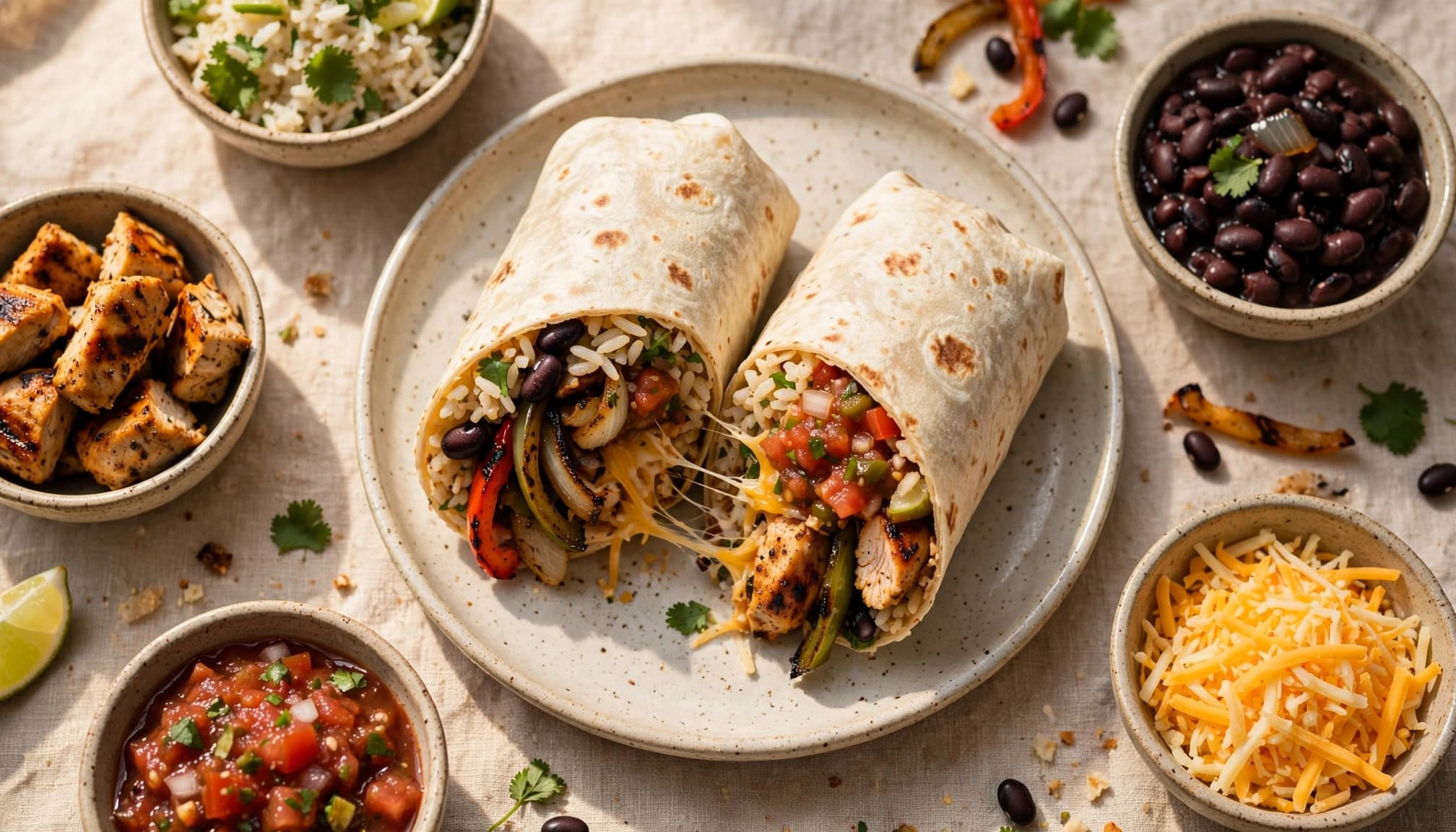
QDOBA lists 720 to 1,080 calories for the burrito described in its published nutrition information. That build includes a tortilla, rice, beans, salsa, cheese, and fajita vegetables, with additional protein available upon request.
The document is titled Nutrition Facts 2020. Its range is a useful reference, but it isn’t a personalized calculation for whatever ends up inside your tortilla.
For example, don’t assume the lowest number describes your preferred vegetarian order or the highest number covers every extra topping. The range alone doesn’t establish either conclusion. It also doesn’t assign an exact total to each combination of fillings.
A custom burrito can differ because you leave out cheese, add queso, choose another protein, or request more rice. Portions matter alongside ingredient choices.
Treat the published range as a starting estimate for the listed meal. When tracking a custom order, use nutrition information that matches its ingredients rather than automatically logging either endpoint.
Which burrito ingredients add the most calories?
What the takeaway menu lists
QDOBA’s takeaway menu provides these component figures:
| Ingredient | Listed calories |
|---|---|
| Burrito tortilla | 300 |
| Cilantro-lime rice | 190 |
| Black beans | 140 |
| Hand-smashed guacamole | 90 |
| 3-cheese queso | 90 |
These are takeaway-menu figures, not a verified breakdown of the nutrition PDF’s standard burrito. Don’t add them together and present the result as an exact order total.
The tortilla contributes calories before any filling goes inside. Rice and beans add more, while protein and cheese also affect the total. Queso and guacamole add calories when you include them, even if they’re offered without an extra charge.
Why two burritos can have different calorie counts
Two burritos with similar names can contain different ingredients and amounts. Less rice, extra cheese, or another topping changes the finished meal.
Portion differences also affect calories, even when both orders contain the same fillings. The available documents don’t establish verified scoop weights for these comparisons, so precise-looking totals can overstate what you know.
For a useful comparison, consider both the ingredients and the amounts you requested.
How to order a lower-calorie QDOBA burrito
Choose where you want the extra calories
Asking for less rice is one way to adjust your burrito without changing the whole order. You can also choose fewer calorie-dense toppings instead of stacking cheese, queso, and guacamole together.
Keep the topping you enjoy most, then use salsa or fajita vegetables for additional flavor. These changes let you customize the meal without promising an exact calorie reduction.
Skipping the tortilla changes the meal into a bowl. However, a bowl isn’t automatically lower in calories than every burrito, because its fillings and portions still count.
Build a meal that still feels filling
Keep a protein you enjoy and include vegetables while choosing portions with care. Beans also provide protein and fiber, so removing them solely to lower calories may not suit your needs.
A satisfying order doesn’t require the smallest possible serving of every ingredient. Instead, decide which portions and toppings fit your appetite, then use current nutrition information that matches the ingredients you’re tracking.
Frequently Asked Questions
Does the burrito calorie range include chips and a drink?
The published description lists the burrito’s ingredients, not a complete meal with sides and beverages. Count chips, dips, and calorie-containing drinks separately when estimating your meal.
Is a vegetarian burrito always lower in calories?
No. A vegetarian order can still contain substantial calories from its tortilla, rice, cheese, queso, and guacamole. Removing meat doesn’t tell you the total without knowing the rest of the build.
Can I use calories to decide whether a burrito is nutritious?
Calories describe energy, but they don’t describe the whole meal. Protein, fiber, sodium, and your dietary needs also matter. Two burritos with similar calories can have different nutritional profiles.
How should I log a burrito if I eat only part of it?
Estimate the fraction you ate and apply that fraction to your best estimate for the whole burrito. However, fillings aren’t always evenly distributed, so half the burrito won’t necessarily contain exactly half its calories. Treat that entry as an estimate.
Use the Range as Your Starting Point
QDOBA’s published burrito range is 720 to 1,080 calories, but your total depends on the build and portions. That distinction matters more than choosing one number for every order.
Use current nutrition information for the ingredients you select. Then choose portions and toppings that fit your appetite and needs, without treating an estimate as an exact measurement.